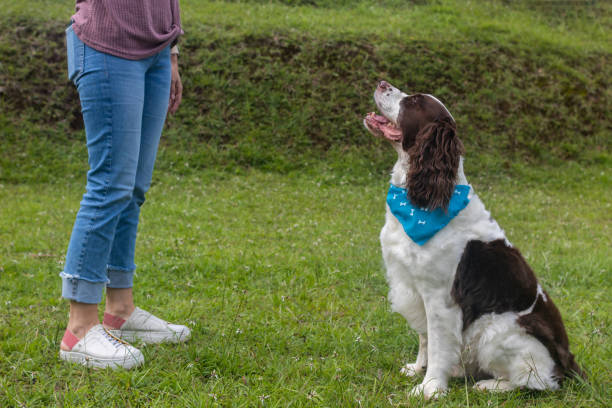

Teaching a dog to sit is an essential part of dog training and helps establish good behaviour and obedience. By following the right techniques, you can easily teach your dog to sit on command.
Key Takeaways
- Teaching your dog to sit is important for managing their behaviour and keeping them safe.
- Positive reinforcement techniques are effective in teaching the sit command.
- Start by luring your dog with a treat and gradually phase out the rewards.
- Consistency and regular training sessions are key to success.
- Once your dog has mastered sitting, you can build on their training with other commands and behaviours.
The Importance of Teaching Your Dog to Sit
Teaching your dog to sit is not just about learning a specific command, but it also plays a crucial role in managing their behaviour and ensuring their safety in various situations. A well-trained dog understands that sitting is a polite behaviour that can be reinforced using positive reinforcement techniques.
When your dog learns to sit on command, it becomes easier to control their actions and redirect their attention when needed. For example, if you encounter a stranger on a walk, asking your dog to sit can help prevent jumping or lunging, ensuring a calm and controlled interaction.
Sitting is also a useful behaviour for maintaining control during daily activities. Whether you’re preparing their meal or attaching their leash, having your dog sit patiently reduces the chances of them rushing or engaging in unwanted behaviours. It promotes calmness and patience, making day-to-day activities more manageable.
Positive reinforcement is an effective training method that encourages and rewards desired behaviours. By using treats, praise, and affection, you can reinforce the sit command and encourage your dog to respond consistently. Positive reinforcement builds a strong bond between you and your dog while motivating them to perform the desired behaviour willingly.
Step-by-Step Guide for Teaching Your Dog to Sit
To teach your dog to sit, you can use effective training techniques that will help them understand and respond to the “sit” command. Follow these steps to teach your dog to sit:
- Begin by holding a treat near your dog’s nose. Make sure they can smell the treat and are focused on it.
- Slowly move the treat over their head, encouraging them to look up and follow the treat with their eyes and nose.
- As your dog follows the treat, their bottom will naturally go down into a sitting position. Make sure to use a gentle and encouraging tone of voice during this process.
- Once your dog is in a sitting position, praise them and give them the treat as a reward for their behavior. The treat reinforces the positive association with sitting.
- Repeat this process in short, regular training sessions to help your dog learn the connection between the command “sit” and the action of sitting. Consistency is key to successful training.
Remember, while teaching your dog to sit, it’s important to be patient and understanding. Every dog learns at their own pace, so be consistent in your training efforts and provide positive reinforcement when they respond correctly. With practice, your dog will eventually understand and reliably follow the “sit” command.
Check out the image below for a visual representation of the step-by-step process:
Adding Hand Signals and Voice Cues
Once your dog has mastered sitting with the treat lure, you can enhance their understanding by adding hand signals and voice cues to the training routine. This helps reinforce the command and enables your dog to respond even when they can’t hear your voice clearly.
To introduce hand signals, say “sit” while simultaneously raising your palm to your shoulder. This visual cue helps your dog associate the raised hand with the desired action of sitting. Practice this hand signal consistently with the verbal cue, ensuring your dog understands the correlation between the two.
If your dog responds correctly by sitting, provide immediate praise and reward. This positive reinforcement reinforces the desired behavior and encourages your dog to repeat it in future training sessions. However, if your dog doesn’t respond to the hand signal, use it again in conjunction with the treat lure and repeat steps one and two until they sit correctly.
By incorporating hand signals and voice cues, you provide your dog with multiple modes of communication and increase their responsiveness to your commands. This adds another layer of reliability to their training and sets the foundation for learning more advanced skills.
Phasing Out Treat Rewards
As your dog becomes more proficient in sitting, it’s time to gradually reduce their dependency on treat rewards and shift towards positive reinforcement through verbal praise. This training technique not only reinforces their ability to follow commands but also encourages obedience and good behavior.
Start by rewarding faster sits with treats while still acknowledging slower sits with verbal praise. This process helps your dog understand that sitting on command is expected, even without the immediate treat reward. By gradually reducing the frequency of treats, you can encourage your dog to respond reliably to the command “sit” using positive reinforcement alone.

Remember to consistently provide praise and positive reinforcement for successful sits, ensuring your furry companion feels encouraged and motivated. While it’s natural for dogs to respond more eagerly to treats, reinforcing their behavior with verbal praise helps build a strong foundation of obedience.
It’s important to note that this transition should be approached gradually and at a pace that suits your dog’s individual learning style. Some dogs may require a longer period of treat rewards before transitioning completely to verbal praise, while others may adapt more quickly. Patience and consistency are key to successful training.
Continue practicing short, regular training sessions to reinforce the “sit” command without relying heavily on treats. As your dog becomes more accustomed to verbal praise, they will begin to associate the command with the desired behavior and respond even in the absence of treat rewards.
By phasing out treat rewards and emphasizing positive reinforcement, you are reinforcing your dog’s bond with you as their trainer and fostering a trusting and cooperative relationship. Remember to always make the training experience enjoyable and rewarding for your furry friend.
Transitioning to Voice Cues Only
Once your dog consistently responds to the voice cue “sit,” it’s time to transition to using voice cues only. This stage of training helps strengthen their understanding of the cue and reinforces their ability to respond without any visual prompts.
To begin, start increasing the time between giving the voice cue and using the hand signal. This gradual reduction in the reliance on hand signals encourages your dog to associate the command with the action of sitting. It reinforces their understanding that the verbal cue alone is enough to elicit the desired response.
Remember to use a clear and consistent voice cue when transitioning to voice cues only. Speak in a confident and firm tone, emphasizing the word “sit.” By doing so, you establish your authority as the pack leader and reinforce the importance of the command.
During this stage, it’s essential to practice patience and persistence. Some dogs may initially struggle to understand the transition, but with consistent training, they will eventually respond reliably to the voice cue alone.
Continue to praise and reward your dog whenever they successfully respond to the voice cue, reinforcing their positive behavior. Celebrate their progress and make training sessions enjoyable for both of you.
Remember, every dog learns at their own pace, so it’s important to be patient and adapt your training techniques to suit your individual dog’s personality and learning style.
Dogs are intelligent animals that thrive on consistent, positive reinforcement training techniques. By transitioning to voice cues only, you are building a strong foundation of communication and obedience with your dog.
Continue to practice in different environments, reinforcing the sit command in various locations and situations. This helps your dog generalize the behavior and respond to the command regardless of distractions or unfamiliar surroundings.
Stay consistent and dedicated in your training efforts, and soon your dog will master the sit command with voice cues alone. This accomplishment will open up the possibilities for further training and behaviors that you can teach your furry companion.
Practice in Various Environments
Training your dog to sit in different environments is an important part of their overall obedience and behavior. By practicing the “sit” command in various locations, you can help your dog generalize the behavior and respond regardless of distractions or surroundings.
When you first start training your dog to sit, it’s best to begin in a quiet and familiar environment. This allows them to focus on the command and learn the behavior without too many distractions. Once they have mastered sitting in this controlled setting, you can gradually introduce new environments to further reinforce their understanding.
Choose a variety of locations to practice, such as your backyard, a park, or even different rooms in your house. Each new environment presents its own set of distractions, smells, and sounds, which can challenge your dog’s ability to sit on command. By exposing them to different environments, you are helping them develop their ability to generalize the behavior and obey the command regardless of the situation.

Tips for Practicing in Various Environments
- Start with familiar commands and reinforce the behaviors your dog already knows, such as “sit” and “stay”. This helps them maintain focus and confidence in new environments.
- Gradually increase the level of distractions. Start with minimal distractions and gradually introduce more challenging ones, such as other dogs, people, or sounds.
- Be patient and give your dog time to adjust to each new environment. Keep training sessions short and positive, rewarding them for successful sits.
- Use positive reinforcement techniques, such as treats or praise, to encourage and motivate your dog to sit in different environments.
- Remember to maintain consistency in your training approach. Use the same verbal cues and hand signals in each environment to help your dog understand what is expected of them.
- Practice regularly to reinforce the behavior and ensure that your dog remains responsive to the “sit” command no matter where you are.
By practicing the “sit” command in various environments, you are setting your dog up for success in different situations. This helps them become well-behaved and obedient companions both at home and out in the world.
Common Mistakes to Avoid
When teaching your dog to sit, it’s important to avoid certain common mistakes that can hinder their learning progress. By being aware of these mistakes and taking the right approach, you can ensure a smoother training experience and better results in terms of puppy obedience and canine behaviour.
1. Avoid Pushing their Bottom Down
Pushing your dog’s bottom down to make them sit is not an effective technique. It can lead to confusion and resistance from your dog. Instead, utilize positive reinforcement methods such as treats and praise to encourage your dog to sit willingly. This approach encourages a positive association with the sit command and reinforces their understanding of what is expected of them.
2. Steer Clear of Confusing Phrases
Using phrases like “sit down” can confuse your dog and make it harder for them to understand what you want them to do. Stick to simple, clear commands like “sit” to avoid any confusion. Consistency in your commands will help your dog associate the specific word with the desired action, leading to faster and more effective learning.
3. Be Patient and Consistent
Patience and consistency are key when training your dog to sit. It’s important to remember that every dog is unique and will learn at their own pace. Avoid getting frustrated or giving up if your dog doesn’t grasp the concept immediately. Practice regularly and remain consistent in your training approach. This will reinforce the desired behaviour and gradually improve your dog’s obedience.
By avoiding these common mistakes and employing positive reinforcement techniques, you can effectively teach your dog to sit and establish a foundation for further obedience training. Remember to always prioritize your dog’s comfort and well-being throughout the training process.
Building on the Sit Command
Once your dog has mastered the sit command, you can take their training to the next level. The sit command serves as a solid foundation for teaching them other commands and behaviors. By building on this fundamental skill, you can further enhance their obedience and strengthen your bond with them.
One important command you can introduce is “stay.” This command teaches your dog to remain in a sitting position until released. Start by giving the sit command, then take a step back while extending your hand in a stop signal. If your dog stays in the sitting position, praise and reward them. Gradually increase the duration of the stay and practice in different environments to reinforce their understanding of this command.
Another useful command to teach is “down.” This command teaches your dog to lie down on command. Begin by giving the sit command, then hold a treat close to the ground, leading your dog’s nose downward. As their body follows the treat, praise them and give them the treat when they are in a down position. Practice this command regularly, gradually reducing the need for a treat lure.
In addition to commands, you can also focus on behavior training. For example, you can teach your dog to greet people politely by discouraging jumping. When your dog starts to jump, gently turn away and ignore them. Only give attention and praise when they have all four paws on the ground. Consistency is key in this training, as it helps your dog understand that jumping is not an acceptable behavior.
To keep your dog mentally stimulated, consider introducing interactive toys and puzzle games. These toys provide mental challenges and help prevent boredom, which can lead to destructive behaviors. Engaging in activities such as obedience training, agility, and scent work can also provide mental and physical exercise for your dog.
Remember, training is an ongoing process that requires patience, consistency, and positive reinforcement. Celebrate your dog’s successes, and always reward them for their efforts. With continued training and care, your dog will become a well-behaved and obedient companion.
Consistency and Regular Training
Consistency is the key to successful dog training. When teaching your dog to sit, it’s crucial to establish a regular training routine. Short, frequent training sessions are more effective than infrequent, long ones. This allows your dog to stay focused and motivated throughout the training process.
During each training session, be sure to use the same training techniques consistently. This helps your dog associate the command with the desired behavior. Whether you use positive reinforcement, clicker training, or any other method, sticking to a consistent approach will yield the best results.
When it comes to pet training tips, keep in mind that practice makes perfect. Consistency and regularity are essential for your dog to learn new commands and behaviors. Aim to train your dog at least once or twice a day, keeping the sessions short and engaging.
Remember to be patient and persistent. Dogs learn at different paces, so it’s important not to rush the process. Celebrate small victories and reward your dog’s progress. With time and dedication, your dog will learn to sit reliably on command.
For more training techniques and pet training tips, consult reputable resources and seek guidance from professional trainers. They can provide valuable insights and tailored advice to suit your dog’s specific needs.

Additional Resources for Dog Training
If you’re looking for more guidance and expert advice on dog training, there is a wealth of resources available to help you enhance your pet’s training and improve their behavior. Online videos, comprehensive guides, and expert advice can all be valuable sources of information.
One great resource is the Dog Training Institute, which offers a range of online courses and tutorials to suit every dog owner’s needs. From basic obedience training to more advanced behavior modification, their instructors provide comprehensive training materials and step-by-step guidance to ensure effective results.
Another excellent resource is Pet Training Tips, a popular website that focuses on providing helpful tips and techniques for training different pets, including dogs. They cover a wide range of topics, from basic commands to problem-solving strategies, making it easy for pet owners to find practical advice to suit their specific training goals.
Remember, when it comes to training your furry friend, consistency and patience are key. By utilizing these additional resources and combining them with your own dedication, you can establish a strong foundation in dog training that will benefit both you and your beloved pet.